Saturday, December 26, 2015

Come and Welcome to Jesus Christ

It's been over four years since I updated this blog and I feel terrible about it. I've read some great Puritan books in the last four years but I still don't have time to type up all of my notes. All of that being said, posted below is a book review on John Bunyan's Come and Welcome to Jesus Christ that I recently wrote for a ThM class. One day I'll have time to post notes from the other books I've read.  

Soli Deo Gloria


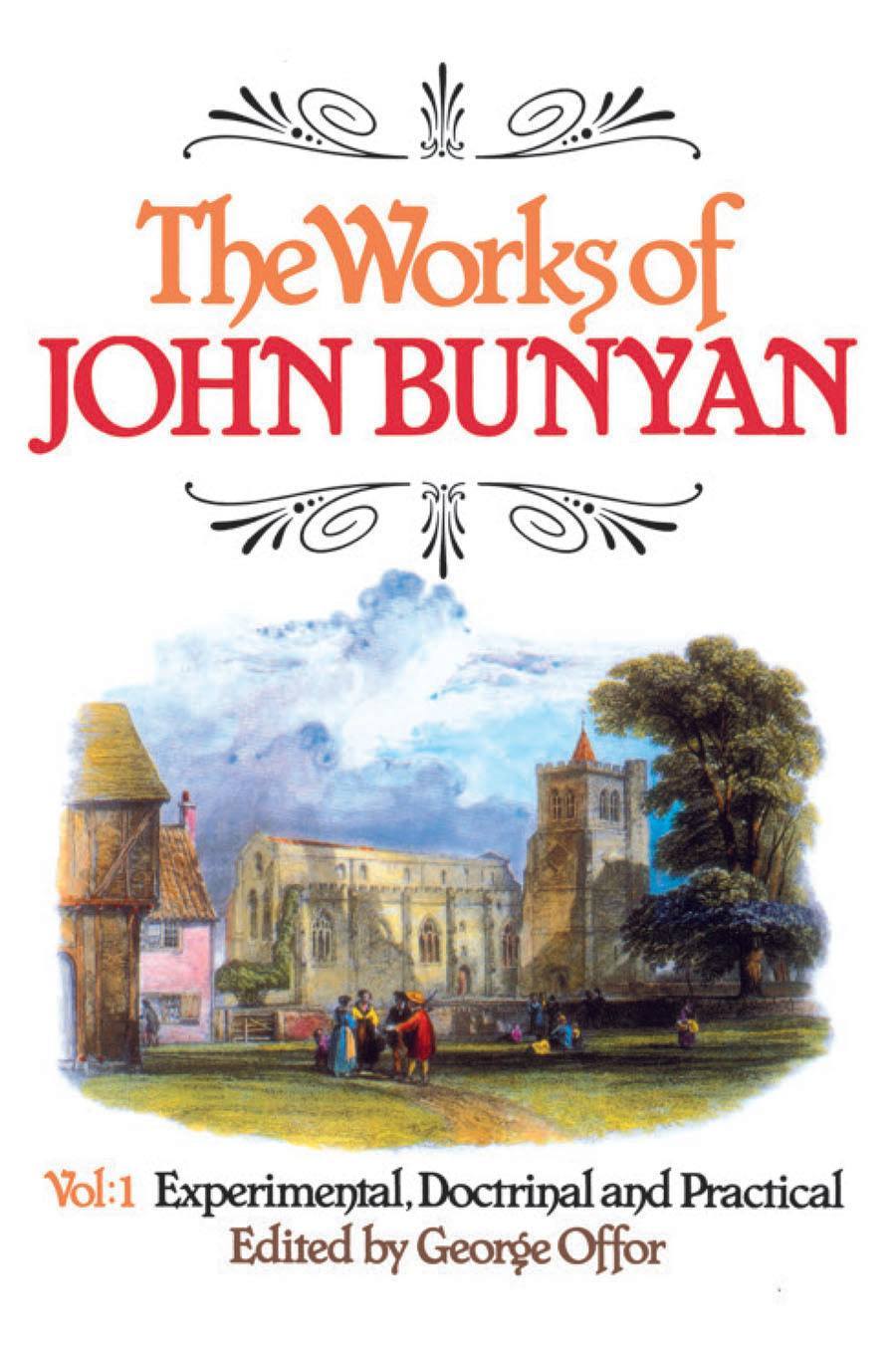
Bunyan, John. Come and Welcome to Jesus Christ. In The Works of John Bunyan, ed. George Offor, 1854; repr. Edinburgh: Banner of Truth, 1991. 1:240. 

         John Bunyan (1628­­­–1688) has been a household name for fifteen generations of Christians thanks to his timeless classic Pilgrim’s Progress. The tale of Christian leaving the City of Destruction, wading through the Slough of Despond, battling Apollyon, and ascending the steep slope to the Celestial City is a pillar of Western literature. Bunyan’s great allegory of Christian faith and life, however, is not his only literary legacy. Many of his other works, both fictional and doctrinal, are rightly heralded as classics as well. Principal among his doctrinal masterpieces is Come and Welcome to Jesus Christ; or, A Plain and Profitable Discourse on John VI. 37.  
Come and Welcome to Jesus Christ is Bunyan’s exposition of John 6:37, “All that the Father giveth me shall come to me; and him that cometh to me I will in no wise cast out.” Bunyan’s subtitle demonstrates that the work is meant to elaborate on the particularities of how and why a sinner comes to Christ. He does this by thorough explication of the biblical text in its Trinitarian context and observation of its doctrinal and applicatory significance in the life of the believer. Bunyan’s nineteenth-century editor, George Offor, wrote that:
It is an enlightened display of the dealings of the Father in giving sinners to Christ; the Son in saving them by his atonement, mediation, and intercession; and the Holy Spirit in sanctifying and fitting them for glory. Here is no Calvinism, Lutheranism, or Arminianism; no Episcopacy, Presbytery, or Independency; nothing but Christism and Bibleism (240).
There is no question that Bunyan’s approach is thoroughly biblical and his entire argument, like so many great Puritan works, based on the text of Scripture. For Bunyan, the text of John 6:37 stood in two parts. “The first part of the text, as is evident, respecteth the Father and his gift; the other part the Son and his reception of that gift” (241). The Father’s gift is a “gift of certain persons to the Son” (241). Bunyan’s exposition emphasized that the Father’s gift of the elect to Christ and Christ’s loving reception and determination to save the gift given to him by the Father was the only avenue by which a sinner could come to Jesus Christ (241). Bunyan’s exposition and application was no doubt steeped in the biblicism Offer referenced but it also, by virtue of its biblicism, exuded experiential Calvinism. An analysis of Come and Welcome to Jesus Christ is best seen through Bunyan’s constant interweaving of the doctrines of grace with the truth expressed in the sixth chapter of the Gospel of John.
            Coming to Christ is a spiritual act that begins as “a moving of the mind towards him” (246). Many believed then, and now, that coming to Christ manifested itself in some extraordinary act or some “strange and wonderful thing” (247).  As a result, many of those coming to Christ were unable to ascertain their coming because they expected an extravagant happenstance. Bunyan, however, believed that a sinner’s mind moving to Christ was quite a remarkable thing, if not normally exotic. “I say, to see this man moving with his mind after the Lord Jesus Christ, is one of the highest wonders in the world” (247). It was a wonder because of the natural state of man. Spiritual movement toward Christ, in a human sense, is only possible when one understands the total depravity of man and his utter inability to save himself. “Indeed,” writes Bunyan, “without this sense of a lost condition without him, there will be no moving of the mind towards him” (247).
            Belief in the doctrine of total depravity is essential to coming to Christ; those that come to Jesus Christ for life must believe that the righteousness of the world offers only eternal death and damnation (249). “For,” asks Bunyan, “will he that believeth not the testimony of Christ concerning the baseness of sin, and the insufficiency of the righteousness of the world, come to Christ for life?” (249). The biblical answer Bunyan gives is a resounding no. A man does not come to Christ if he rejects the plain teaching of Scripture with regards to sin, Christ’s power to save, and the exclusivity of life found only in Christ (249).
Total depravity is not just found in Bunyan’s expository section of the text. It is also clearly seen in his doctrinal and applicatory observations. Bunyan states that man’s inability to come to Christ by his own power is evident in his spiritual deadness. “What power has he that is dead, as every natural man spiritually is, even dead in trespasses and sins? Dead, even as dead to God’s New Testament things as he that is in his grave is dead to the things of this world” (275). The doctrinal significance of total depravity is more than just a lack of power to come to Christ; it is an utter lack of will to come and live. Bunyan employs John 6:44 to drive home this point.[1] “By this text,” he declares, “there is not only insinuated that in man is want of power, but also of will, to come to Jesus Christ” (276).
Coming to Christ in faith is a “heavenly gift” that man must be given by the Father (276). As such, those that reject the doctrine of total depravity do so at great risk. Here we see Bunyan in his historical context. The Church of England after the restoration of the monarchy in 1660 was far less Calvinistic than its predecessor. Most of the prominent non-conformist ministers were Calvinists, like Bunyan, and they were routinely jailed for their beliefs and teachings. For Bunyan, this theological persecution is, in part, due to a rejection of the doctrine of total depravity. Bunyan, speaking within this historical context, writes:
Sinners, did you but know what a blessed thing it is to come to Jesus Christ, and that by the help and drawing of the Father, they do indeed come to him; you would hang and burn in hell a thousand years, before you would turn your spirits as you do, against him that God is drawing to Jesus Christ, and also against the God that draws him (277).
Bunyan is clear that the predominately Arminian camp in the Church of England that persecuted Calvinist non-conformists risked being judged as haters of Jesus, the Father, and the Spirit because they hated those coming to the Son by the power of the Father and the help of the Spirit (277).
            Bunyan’s application of total depravity consists in describing where a man is that comes not to Christ, what he is that comes not to Christ, and where he is going that comes not to Christ. The man that comes not to Christ is positionally: (1) far from God the Father; (2) far from Jesus Christ; (3) far from the Holy Spirit; (4) far from the righteousness that saves; (5) under the dominion of sin; (6) in the “pest-house with Uzziah”; (7) his life is among the unclean; (8) he is in sin; (9) under the curse of the law; (10) in darkness; and (11) in the broad way of destruction (291).  That man that comes not to Christ is: (1) counted as an enemy of God; (2) a child of the devil; (3) a child of wrath; (4) a “self-murderer”; and (5) a “companion for devils and damned men” (291). The man not coming to Christ is: (1) likely to go further from Christ; (2) continue to go on in darkness; and (3) is “like to be removed at last as far from God, and Christ, and heaven, and all felicity, as an infinite God can remove him” (291). A man left to his own depravity will never come to Christ because “men by nature are far from Christ” (291).
            Men come to Christ, not of their own power, but only if the Father has unconditionally elected them. “For the gift of the Father there is this to be considered, to wit, the gift itself; and that is the gift of certain persons to the Son” (241). Bunyan’s explication of John 6:37 begins with an explanation of the extent of the gift given to Christ, the person giving that gift, and the intent on giving. The extent of the gift that the Father gives the Son is the elect. God the Father did not give all men to Jesus Christ for salvation. If so, then all men would be saved. The extent of the gift, “are those that are given by covenant to the Son; those that in other places are called ‘the elect,’ ‘the chosen,’ ‘the sheep,’ and ‘the children of the promise,’ &c” (243). The Father, as the giver of the elect to Jesus Christ, is to be “remembered and adored, as one having a chief hand in the salvation of sinners” (243). God the Father gave the elect to Christ Jesus in the covenant of redemption before the world began and gives them temporally in the covenant of grace (244).[2] The Father’s intent in giving the elect to the Son emphasizes Christ’s fitness, patience, and power to save. Unlike those that believe salvation is in the power of man, Bunyan sees in John 6:37 that the unconditional election of particular sinners in eternity past is the only foundation for the elects’ salvation. Bunyan writes that, “Herein, indeed, perceive we the love of God. Huram gathered, that God loved Israel because he had given them such a king as Solomon. But how much more may we behold the love that God hat bestowed upon us, in that he hath given us to his Son, and also given his Son for us?” (246).
The coming of the elect to Christ is rooted in God’s unconditionally free gift of the elect to Christ. Bunyan makes this point clearly in the explicatory section of his treatise. “That coming to Jesus Christ aright is an effect of their being, of God, given to Christ before. Mark, They shall come. Who? Those that are given. They come, then, because they were given” (254). The elect come because they were elected to come; their coming is an effect of being chosen. Bunyan argues that Christ knows those given to him by the Father “not by their coming to him, but by their being given to him” (261). There are no surprises in the economy of salvation. This is essential because the “him that cometh to me” referenced by Jesus in John 6:37 is predicated on truthfulness of the former promise “all that the Father giveth me shall come to me.” Bunyan uses Acts 18:9-10 as a key passage to demonstrate that election, and not effort, is the foundation of the gift.[3] The Corinthians belonging to God referenced in Paul’s dream were not yet converted but were still accounted as the Lord’s, not by conversion but rather, “by virtue of the gift of the Father; for he had given them unto him” (261). Bunyan, like the Apostle John, is quite clear that every sinner given unconditionally by the Father will come to the Son and not a person more (262).
The effectual coming of the elect to Christ is accomplished by irresistible grace. In his expository section on what force there is to make a person come to Christ, Bunyan states “‘They shall come;’ that is, not if they will, but if grace, all grace, if power, wisdom, a new heart, and the Holy Spirit, and all joining together, can make them come” (254). Christ’s declaration that all given to him will come to him is based on an absolute promise of God and, as such, God effects the means of its accomplishment. The promise of God to save the elect not only guarantees the end result but also the means by which it is accomplished. Christ’s promise of Shall-come means that even those dead in trespasses and sins will be spiritually raised if the absolute promise pertains to them (256). A sinner’s lack of desire to come to Christ is no impediment to God’s accomplishment of His absolute promise to save them. Bunyan writes, “You shall come, says God; I will not come, saith the sinner. Now, as sure as he is concerned in this Shall-come, God will make that man eat his own words; for I will not is the unadvised conclusion of a crazy-headed sinner; but Shall-come was spoken by him that is of power to perform his word” (256).  Sinners, without the intervening work of the Holy Spirit, are blind and can only be given sight if they fall within the Shall-come promise of God (257). Faith and repentance are not works that a man does of his own free will but rather something given to them as a condition of their inclusion in the promise of Shall-come (257).
The doctrine of irresistible grace is further seen in the expository section on the import of the words “to me.” In one of the most beautiful passages in the book, Bunyan states that there is a heart-attracting glory in the Lord Jesus Christ that renders a man completely willing to come and be saved. “There is therefore heart-pulling glory in Jesus Christ, which, when discovered, draws the man to him; wherefore by shall come to me Christ may mean, when his glory is discovered, they must come, then they shall come to me” (260). As we sinners awake to the “heart-attracting glory” in the person of Jesus Christ, this glory “makes us come to him” (260). The elect, under the promise of shall come to me, will undoubtedly come to Christ for life because the promise guarantees their discovery of the glory of His grace and that glory renders them willing, able, and desirous to come (261). In Bunyan’s words, “They see glory in his person, glory in his undertakings, glory in the merit of his blood, and glory in the perfection of his righteousness; yea, heart-affecting, heart-sweetening, and heart-changing glory” (260).
The elect are enabled to come to Christ by virtue of being given to the Son by the Father (261). Here unconditional election and irresistible grace meet. The first major argument in Bunyan’s observational section of John 6:37 pertains to irresistible grace. The biblical text is clear that “coming to Christ is not by the will, wisdom, or power of man, but by the gift, promise, and drawing of the Father” (275). The Scripture denies both a sinner’s will to come to Christ and his wisdom to come (275). Man does not have the wisdom to come because the cross is foolishness to the world and “God counted the wisdom of this world one of his greatest enemies; therefore, by that wisdom no man can come to Jesus Christ” (275). Man does not have the will to come to Christ because sinners are dead in sin (275). “Hence,” writes Bunyan, “we are said to be made willing to come by the power of God; to be raised from a state of sin to a state of grace, by the power of God; and to believe, that is to come, through the exceeding working of his mighty power” (275). Bunyan references John 6:44-45 as proof that sinful men only come to Christ if drawn by the Father and taught by God (276).[4] This doctrine has the practical effect of saints glorifying God all the more because they rightly ascribe their election and coming to God alone (276). The advantage the believer has in Jesus Christ is a full and free savior, as demonstrated in Christ’s power to call and save those that come to Him (297). Bunyan actually concludes his work with a pronounced emphasis on God’s work alone in drawing the sinner to Christ.
Art thou coming? This is because God hath inclined thine heart to come…It is God that worketh in thee to will, and to come to Jesus Christ. Coming sinner, bless God for that he hath given thee a will to come to Jesus Christ. It is a sign that thou belongest to Jesus Christ, because God has made thee willing to come to him. Bless God for slaying the enmity of thy mind; had he not done it, thou wouldst as yet have hated thine own salvation (299).
John Bunyan’s treatment of the doctrines of total depravity, unconditional election, and irresistible grace are noteworthy and impressive despite being less than systematic. These doctrines, clearly seen in John 6:37, form the structural framework for his understanding of the entire economy of salvation.  All of that beings said, the real strength of Come and Welcome to Jesus Christ lies in Bunyan’s treatment of the perseverance of the saints. The absolute promise that all given shall-come is the foundation and precondition of the conditional promise to come to Christ for life. Sinners can be certain that if they come to Christ then He will accomplish His work by virtue of the absolute promise to save the elect; this promise precludes doubting (264). Bunyan makes a key distinction between the doubting of the sinner that is coming to Christ and the assurance of the sinner that is already come to Christ. The one that is come to Christ is knowledgeable of the Lord’s pardon and Christ’s power to persevere in his life. He that is come, as opposed to he that is coming, has the advantage of assurance. “In a word, he that is come to Christ, his groans and tears, his doubts and fears, are turned into songs and praises” whereas he that is coming but not yet come “hath not those praises nor songs of deliverance…which is, the sealing testimony of the Holy Ghost, through the sprinkling of the blood of Christ upon his conscience, for he is not come” (265).
            Bunyan rightly saw Christ’s promise in John 6:37 as an unassailable fortress of assurance despite the continuing presence of sin in the life of believers. Bunyan argues that the text here refers to two types of coming sinners, principally, the newly awakened sinner and the returning backslider (266). The majority of ink spilled in this section concerns not the new believer but rather the returning backslider. The backslider can still come to Christ because the Scripture says that Jesus will not cast out any that come to him. There are no prohibitions provided they come. This, Bunyan insists, is because perseverance in the faith is based on God’s power and not man’s ability to keep himself. Bunyan believes all the promises of Scripture amount to this one promise of Christ, “‘I will in no wise cast out;’ I will for nothing, by no means, upon no account, however they have sinned, however they have backsliden, however they have provoked, cast out the coming sinner” (267). Bunyan uses the Apostle Peter, the disciples, the man that lay with his father’s wife in 1 Corinthians, and the thief in Ephesians 4:28 as biblical examples of grace being offered for the benefit and return of backsliders (267).
            Bunyan argues that Christ’s promise to “in no wise cast out” carries an explicit and implied idea. The expressed idea is that Jesus Christ has an “unchangeable resolution to save the coming sinner” (268). He that comes to Christ has no basis to fear God’s judgment because his salvation rests on the “absolute determination” of God (269). The implied idea is that there are many forces that seek to hinder a sinner’s coming to Jesus Christ. Bunyan says that Satan, our own sin, and the law of Moses raise their voices against us and cause us to fear being cast off by Christ. “These things,” says Bunyan, “do accuse us before Christ Jesus; yea, and also to our own faces, if perhaps they might prevail against us. But these words, ‘I will in no wise cast out,’ secureth the coming sinner from them all” (270). Christ’s righteous promise to save is stronger than our unrighteousness.
The Puritans often struggled with assurance of salvation because of their own piercing introspection and understanding of their own unrighteousness. Bunyan argues that the coming sinner, despite all their sin, has no ground for doubting the Lord’s power or willingness to save them so long as “I will in no wise cast out” remains a part of Scripture. Bunyan’s belief in the connection between assurance and perseverance is so strong that to not forsake the doubts raised by Satan, sin, and the law is to transgress the command of Christ (290). The extent of the promise means that Christ will not cast out a great sinner, an old sinner, a hard-hearted sinner, or a backsliding sinner provided they are coming to Christ (280). Satan’s attempt to convince the coming sinner that he is not elect should be met with, “I am coming; and that I could not be, but that the Father draws me; and I am coming to such a Lord Jesus, as will in no wise cast me out” (284). Here in Bunyan one can see how the doctrine of irresistible grace serves an aid to the doctrine of the perseverance of the saints. The coming sinner can be assured of his salvation and perseverance in the faith because God the Father draws him, and all that are drawn by the Father are given to the Son, and all that are given to the Son will never be cast out.
            Bunyan’s recognition of assurance as the fuel for perseverance leads him to call unbelief “the white devil.” The sin of unbelief causes the sinner to doubt their coming to Christ because of their unfitness, their tender conscience, and their knowledge of their own corruption (293). This white devil uses, “so many sweet pretences to safety and security, that it is, as it were, counsel sent from heaven” (293). The power of these insidious arguments is hard for even the wisest Christians to shake off because they appear to be biblical arguments (293). The coming sinner should take encouragement, however, from the promise that Christ will never cast him out. Christ is full of grace, full of truth, full of wisdom, full of the Spirit to communicate to the coming sinner, a full storehouse of graces, full of compassion, full of might, and lowly in heart to save the coming sinner (297).
            John Bunyan’s Come and Welcome to Jesus Christ is a tour de force of experiential Calvinism. It is an exemplary demonstration of how sound doctrine should drive Christian life. The doctrine of total depravity teaches the coming sinner that he has nothing to offer God in exchange for his soul. Unconditional election and irresistible grace teach the coming sinner to see God as the author of salvation and the effectual means of accomplishing it in time. Finally, the perseverance of the saints undergirds the assurance that rightfully belongs to the coming sinner. God’s absolute promise to save the coming sinner means that his salvation and perseverance is assured. Ultimately, all of these doctrinal truths seek to aid the sinner in answering the eternally significant question “Am I come to Jesus Christ?” (296).
For upon this one question, Am I come, or, am I not? hangs heaven and hell as to thee. If thou canst say, I am come, and God shall approve that saying, happy, happy, happy man art thou! But if thou art not come, what can make thee happy? yea, what can make that man happy that, for his not coming to Jesus Christ for life, must be damned to hell? (296)


[1] In John 6:44 Jesus states, “No man can come to me, except the Father which hath sent me draw him: and I will raise him up at the last day.”
[2] The use of covenant of redemption and covenant of grace is mine and not Bunyan’s. While it is clear that Bunyan sees eternal and temporal aspects of God’s giving the elect to Christ as mediator, it is unclear from this work whether Bunyan saw both covenants separately or if he saw the eternal covenant between the Father and the Son as a subset of the covenant of grace.
[3] Acts 18:9-10 (KJV) “Then spake the Lord to Paul in the night by a vision, Be not afraid, but speak, and hold not thy peace: For I am with thee, and no man shall set on thee to hurt thee: for I have much people in this city.”
[4] John 6:44-45 (KJV) “No man can come to me, except the Father which hath sent me draw him: and I will raise him up at the last day. It is written in the prophets, And they shall be all taught of God. Every man therefore that hath heard, and hath learned of the Father, cometh unto me.”

Friday, May 27, 2011

The Bruised Reed: Part I

The Bruised Reed (PP)
"Behold my servant, whom I uphold; mine elect, in whom my soul delighteth; I have put my spirit upon him: he shall bring forth judgment to the Gentiles. He shall not cry, nor lift up, nor cause his voice to be heard in the street. A bruised reed shall he not break, and the smoking flax shall he not quench: he shall bring forth judgment unto truth"
---Isa. 42:1-3

The above verse from Isaiah 42 supplies the premise of Richard Sibbes 1630 work The Bruised Reed. This book is an amazing read which has been highly praised throughout the last four centuries. Christian ministers from Richard Baxter in the 17th century to D. Martyn Lloyd-Jones in the 20th century have atested to its power.  

The two themes of the bruised reed and the smoking flax form the basis of the entire book. According to Sibbes exegesis of the Isaiah 42 passage, the bruised reed is the man in misery who sees sin as the cause of that misery. The smoking flax is the brusied reed who has the "spark of hope" from Christ but is still plagued by doubts and fears that are the result of his manifold corruptions. Sibbes argues that the bruising of man is necessary both before and after conversion. Before our conversion it is needed because, "Our hearts, like criminals, until they be beaten from all evasions, never cry for the mercy of the Judge" (pg. 4). Sibbes writes that bruising is needed after conversion, "so that reeds may know themselves to be reeds, and not oaks" (pg. 5). In all of this, Sibbes argues, bruising is a gracious work wrought by God. He exhorts us to remember in our bruising, "Let us lament our own perversity, and say: Lord, what a heart have I that needs all this, that none of this could be spared!" (pg. 12). We as Christians are not to fear bruising or wish that it never come upon us for only those who have been bruised and healed by Christ will find themselves in celestial glory with the Savior.

The smoking flax is the child of God who, after conversion, has a little grace mixed with much corruption. Christ will not quench this smoking flax however because, "this spark is from heaven: it is his own, it is kindled by his own Spirit. And secondly, it tends to the glory of his powerful grace in his children that he preserves light in the midst of darkness, a spark in the midst of the swelling waters of corruption" (pg. 20). Sibbes has much to say of this smoking flax. We should not be deceived into believing that we have not received grace because we are not as spiritually mature or as holy as others. "By false conclusions," Sibbes writes, "we may come to sin against the commandment in bearing false witness against ourselves" (pg. 35). We must be constantly reminded that we are not under the covenant of the law but rather the covenant of grace. This is a great truth for, "Moses, without any mercy, breaks all bruised reeds, and quenches all smoking flax. For the law requires personal, perpetual and perfect obedience from the heart, and that under a most terrible curse, but gives no strength. It is a severe task master, like Pharaoh's, requiring the whole tale of bricks and yet giving no straw. Christ comes with blessing after blessing, even upon those whom Moses had cursed, and with healing balm for those wounds which Moses had made" (pg. 36). 

TO BE CONTINUED...


Wednesday, May 25, 2011

UPDATES SOON

UPDATES ARE FORTHCOMING!!!

I have been really busy at work and seminary has swamped me as of late. Fret not though for I have three more books to review and I hope to write the reviews soon. The titles are Indwelling Sin by John Owen, The Bruised Reed by Richard Sibbes, and The Letters of Samuel Rutherford.

Soli Deo Gloria!

Friday, February 4, 2011

A Quest for Godliness by J.I. Packer (Part III)

John Owen's The Death of Death in the Death of Christ was a polemical work against Arminianism written in the year 1647 (five years after Owen's first polemic on Arminianism). Below are some of the salient points that I garnered about this work from J.I. Packer's work A Quest for Godliness.

Notes on John Owen's Polemic on Arminianism

A discussion on the extent of the atonement (who is saved thereby) leads to a further discussion on the nature of the atonement (what did Christ accomplish thereby).

  • The idea of universal salvation finds only rebuke when confronted with Scripture which leaves only two possible implications; either Christ died in accordance with the Father's will to actually purchase the salvation of some (particular redemption) or Christ died to make it possible for any person to be saved who believes in Christ of their own libertarian free will (general redemption). Since Scripture asserts that Christ's work on the Cross was effective, the latter implies that Christ failed in effecting the actual salvation of anyone because only the possibility of salvation was purchased on the Cross. Owen sees this implication as derogatory and blasphemous to a God who accomplishes everything in His purpose.
  • Arminianism asserts that, "if faith and unbelief are to be responsible acts, they must be independent acts" (Packer, 137). Arminianism, described as a semi-pelagian works-based salvation masquerading under a different name, says that we save ourselves by accepting the salvation that Christ made possible on the Cross. This has a remarkably negative implication when one tries to understand justification by faith. As Packer writes, "What we say comes to this--that Christ saves us with our help; and what that means, when one thinks it out, is this--that we save ourselves with Christ's help" (Packer, 137).
  • The old gospel that Owen preaches is not only as full and free an offer of salvation as the Arminian version but it is the most edifying gospel because it finds its power in the absoluteness of God's sovereignty which fully highlights the true nature of God's mercy.
  • The Arminian doctrine of a universal divine saving purpose (general redemption) has two more negative implications and here I will use Packer's words at length because I think it might be his best passage on the topic. 
    "The first is that it compels us to misunderstand the significance of the gracious invitations of Christ in the gospel of which we have been speaking; for we now have to read them, not as expressions of the tender patience of a mighty Sovereign, but as the pathetic pleadings of impotent desire; and so the enthroned Lord is suddenly metamorphosed into a weak, futile figure tapping forlornly at the door of the human heart, which he is powerless to open. This is a shameful dishonor to the Christ of the New Testament. The second implication is equally serious; for this view in effect denies our dependence on God when it comes to vital decisions, takes us out of his hand, tells us that we are, after all, what sin taught us to think we were--masters of our fate, captain of our souls--and so undermines the very foundation of man's religious relationship with his Maker" (Packer, 143).

Friday, January 14, 2011

A Quest for Godliness by J.I. Packer (Part II)


This installment of my reading reflections deals with Chapter 8 in Packer's book A Quest for Godliness.  The title of this chapter is "Saved by His Precious Blood: An Introduction  to John Owen's The Death of Death in the Death of Christ." This chapter was the most profound for me personally because it was a scathing rebuke of the Arminian theology so present in modern day evangelical Christianity; a problem that was equally present in the 17th century England of John Owen.

An incomplete outline with quotes and some of my own reflections:
  • The old gospel, which consisted in the unconditional election of totally depraved sinners for salvation by the sovereign grace of God, was a God-centered gospel.  The new gospel, which consists of conditional election of almost totally depraved sinners for salvation based upon the free-will of man, is a man-centered gospel. Calvinism (the old gospel) and Arminianism (the new gospel) are very similar in a myriad of points.  That being said, in the words of Packer, "a half-truth masquerading as a whole truth becomes a complete untruth. Thus, we appeal to men as if they all had the ability to receive Christ at any time; we speak of his redeeming work as if he had done no more by dying than make it possible for us to save ourselves by believing; we speak of God's love as if it were no more than a general willingness to receive any who will turn and trust; and we depict the Father and the Son, not as sovereignly active in drawing sinners to themselves, but as waiting in quiet impotence 'at the door of our hearts' for us to let them in" (Packer, 126-127).
    • This is a brutal critique of Arminianism. This belief, by thinking it is affirming the love of God through the idea of a general atonement, has undermined the sovereignty of God (also taught in Scripture) and as a result has jettisoned the true love of God. In effect, they have thrown out the baby with the bathwater. The love of God demonstrated in the gospel is not that Christ paid for the sins of all men but rather that he paid for the sins of all His chosen sheep. One need only read John 10, Romans 9, or Ephesians 1 to understand that God's glory is manifested specifically in saving undeserving sinners who are incapable, by their nature, of saving themselves.  
  •  Packer next gives a quick overview of Arminian and Calvinistic theology.
    • Arminianism believes (among other things): 
      • Man is never totally corrupted by sin to the point that he cannot receive the gospel.
      • Man can resist the call of the Holy Spirit.
      • Election is based on God's foreknowledge of man's free-will decisions.
      • The atonement did not save anyone in particular but made it possible for the salvation of all.
      • Man can fall from a state of grace and the assurance of salvation by failing to keep themselves in faith.
    •  Calvinism believes (among other things):
      • Man is totally depraved by sin and thus unable to come to God of his own free-will.
      • Election is based on God's sovereign, unconditional choice of sinners to be redeemed by Christ.
      • The atonement did save each of God's elect in particular.
      • The Holy Spirit never fails in his mission of bringing the elect to Christ.
      • The saved can be assured of their final salvation because it rests on the power and supremacy of God.
  • Packer, noting that the famous "five points of Calvinism" were simply a response to the five-point Arminian work known as "The Remonstrance", explains how myopic the five points of Calvinism are in relation to the overall theology of Calvinism.
    • Calvinism is much broader than the five points.
    • While the five points present Calvinist soteriology in a negative form, Calvinism is at its core a expository and pastoral theology.
    • The five points tend to distract from the "organic character" of Calvinistic thought on soteriology.
      • Calvinism's central soteriological point is simply that God saves sinners.
    • The five points obscures the wide gulf between Arminian and Calvinistic soteriology.
      • The Arminian sees the following formula: my faith resulted in my election.
      • The Calvinist sees the following formula: my election resulted in my faith.
      • Arminian theology says that the cross makes salvation possible whereas Calvinism says that the cross actually saved.
    • While the five points were initially formulated as a response to Arminian doctrine, Calvinism predates Arminianism. That is because Calvinism, though named for the great reformer, is nothing more than the biblical gospel.  As C.H. Spurgeon would state, "That doctrine which is called 'Calvinism' did not spring from Calvin; we believe that it sprang from the great founder of all truth." I think the most brutally accurate critique of Arminianism in the book comes on this point. Packer states:
      • "Certainly, Arminianism is 'natural' in one sense, in that it represents a characteristic perversion of biblical teaching by the fallen mind of man, who even in salvation cannot bear to renounce the delusion of being master of his fate and captain of his soul" (Packer, 133).
To be continued...(next time we will continue with John Owen's critique of Arminianism in his polemical work "The Death of Death in the Death of Christ.")

Monday, January 3, 2011

A Quest for Godliness by J.I. Packer (Part I)

My first book review is not actually one by a Puritan but rather one about the Puritans. A Quest for Godliness: The Puritan Vision of the Christian Life is the culmination of over thirty years of study and research on the part of famed theologian J.I. Packer. Packer credits the Puritans with convincing him of the nature of sin and the need of its mortification, the ubiquity of God's sovereignty in Scripture, the need for meditation, a vision of pastoral ministry, the transitory nature of life on Earth, the essence of renewal in the church, and the link between theology and spirituality. This was the book that truly lit the fire of my interest in the Puritans and I will briefly summarize some of the key points I gleaned from Dr. Packer.

Why We Need the Puritans
  1. They were mature about their faith in a way that is lacking in our day and age.
  2. Puritanism was a spiritual movement that was profoundly God-centered.
  3. Puritans demanded a theological, and not pragmatic, justification for everything that they did.
  4. Packer elaborates on three groups of Christians that could particularly benefit from practical Puritan theology. Packer labels these three groups as restless experientialists (seekers of experiences rather than rationality) , entrenched intellectualists (zealots with little warmth or grace), and disaffected deviationists (those who feel disillusioned, let down, or left-behind).
The Puritans and Scripture
  1. Puritanism was a Bible movement at its core.
  2. The Puritans were competent exegetes of Scripture and they exegeted for applicative purposes.
  3. Puritan approaches to accurate Scriptural interpretations: they sought to interpret Scripture...
    •  literally and grammatically
    • consistently and harmonistically
      • The plain must be used to interpret the obscure
      • "Peripheral ambiguities must be interpreted in harmony with fundamental certainties."
    • doctrinally and theocentrically
      • Scripture is doctrine
      • Scripture is God, not man, centered
    • christologically and evangelically
      • Christ is the sum of the whole Bible
    • experimentally and practically
    • with a faithful and realistic application
    • The six questions to ask when interpreting Scripture in the Puritan method:
      • What do these words actually mean?
      • What light do other Scriptures throw on the text? How does it fit in the biblical revelation?
      • What truths does it teach about God and man's relationship to Him?
      • How are these truths related to the saving work of Christ?
      • For what practical purpose does this text stand in Scripture?
      • How do these truths apply to me and others? What are they telling us to believe and do?
To be continued...

Sunday, December 26, 2010

The Purpose of The Puritan Reading Log


What be the purpose of The Puritan Reading Log? Well, the aim is a simple one. I enjoy reading the Puritans. They have been dead for almost four centuries but yet I (and countless others) greatly admire their devotion to Jesus Christ, His bride the church, the exposition of the Scriptures, and the dissemination of the Gospel. 

I have a large collection of Puritan writings that I am about to study and I have created this blog simply as a tool to help review and reflect on what I have read. It is not intended to be masterful nor do I promise it will be insightful. If these reviews stimulate your interest in the Puritans then I will be excited and if they turn you off to the Puritans then I hope that you reconsider. Charles Spurgeon looked back on the Puritan age as the golden age of theology stating, "I have been charged with being a mere echo of the Puritans, but I had rather be the echo of truth, than the voice of falsehood." I pray I prove a faithful echo.

Below is a classic description of an English Puritan by, none other than, an English Puritan. Though I disagree with the author's stance on Baptism, for I am a Baptist, this description is a wonderful framework for Christian attitude and behavior in any era. I first heard this when I was listening to J.I. Packer's 16 audio lessons on the Puritans. These lessons are available through Reformed Theological Seminary on iTunes for free. Enjoy!


The Character of an Old English Puritan, or Non-Conformist 
By John Geree (1600-1649)
The Old English Puritan was such an one, that honored God above all, and under God gave every one his due. His first care was to serve God, and therein he did not what was good in his own, but in God’s sight, making the word of God the rule of his worship. He highly esteemed order in the House of God: but would not under colour of that submit to superstitious rites, which are superfluous, and perish in their use. He reverenced Authority keeping within its sphere: but durst not under pretence of subjection to the higher powers, worship God after the traditions of men. He made conscience of all God’s ordinances, though some he esteemed of more consequence.

He was much in prayer; with it he began and closed the day. In it he was much exercised in his closet, family and public assembly. He esteemed that manner of prayer best, where by the gift of God, expressions were varied according to present wants and occasions; yet did he not account set forms unlawful. Therefore in that circumstance of the church he did not wholly reject the liturgy, but the corruption of it. He esteemed reading of the word an ordinance of God both in private and public but did not account reading to be preaching. The word read he esteemed of more authority, but the word preached of more efficiency.

He accounted preaching as necessary now as in the Primitive Church, God’s pleasure being still by the foolishness of preaching to save those that believe. He esteemed the preaching best wherein was most of God, least of man, when vain flourishes of wit and words were declined, and the demonstration of God’s Spirit and power studied: yet could he distinguish between studied plainness and negligent rudeness. He accounted perspicuity the best grace of a preacher: And that method best, which was most helpful to the understanding, affection, and memory. To which ordinarily he esteemed none so conducible as that by doctrine, reason and use. He esteemed those sermons best that came closest to the conscience: yet would he have men’s consciences awakened, not their persons disgraced.

He was a man of good spiritual appetite, and could not be contented with one meal a day. An afternoon sermon did relish as well to him as one in the morning. He was not satisfied with prayers without preaching: which if it were wanting at home, he would seek abroad: yet would he not by absence discourage his minister, if faithful, though another might have quicker gifts. A lecture he esteemed, though not necessary, yet a blessing, and would read such an opportunity with some pains and loss.

The Lord’s Day he esteemed a divine ordinance, and rest on it necessary, so far as it conduced to holiness. He was very conscientious in observance of that day as the mart day of the soul. He was careful to remember it, to get house, and heart in order for it and when it came, he was studious to improve it. He redeems the morning from superfluous sleep, and watches the whole day over his thoughts and words, not only to restrain them from wickedness, but worldliness. All parts of the day were like holy to him, and his care was continued in it in variety of holy duties: what he heard in public, he repeated in private, to whet it upon himself and family. Lawful recreations he thought this day unseasonable, and unlawful ones much more abominable: yet he knew the liberty God gave him for needful refreshing, which he neither did refuse nor abuse.

The sacrament of baptism he received in infancy, which he looked back to in age to answer his engagements, and claim his privileges. The Lord’s Supper he accounted part of his soul’s food: to which he labored to keep an appetite. He esteemed it an ordinance of nearest communion with Christ, and so requiring most exact preparation. His first care was in the examination of himself: yet as an act of office or charity, he had an eye on others. He endeavored to have the scandalous cast out of communion: but he cast not out himself, because the scandalous were suffered by the negligence of others. He condemned that superstition and vanity of Popish mock-fasts; yet neglected not an occasion to humble his soul by right fasting: He abhorred the popish doctrine of opus operatum in the action. And in practice rested in no performance, but what was done in spirit and truth.

He thought God had left a rule in his word for discipline, and that aristocratical by elders, not monarchical by bishops, nor democratical by the people. Right discipline he judged pertaining not to the being, but to the well-being of a church. Therefore he esteemed those churches most pure where government is by elders, yet unchurched not those where it was otherwise. Perfection in churches he thought a thing rather to be desired, than hoped for. And so he expected not a church state without all defects. The corruptions that were in churches he thought his duty to bewail, with endeavors of amendment: yet he would not separate, where he might partake in the worship, and not in the corruption.

He put not holiness in churches, as in the temple of the Jews; but counted them convenient like their synagogues. He would have them kept decent, not magnificent: knowing that the gospel requires not outward pomp. His chief music was singing of psalms wherein though he neglected not the melody of the voice, yet he chiefly looked after that of the heart. He disliked such church music as moved sensual delight, and was as hinderance to spiritual enlargements.

He accounted subjection to the higher powers to be part of pure religion, as well as to visit the fatherless and widows: yet did he distinguish between authority and lusts of magistrates, to that he submitted, but in these he durst not be a servant of men, being bought with a price. Just laws and commands he willingly obeyed not only for fear but for conscience also; but such as were unjust he refused to observe, choosing rather to obey God than man; yet his refusal was modest and with submission to penalties, unless he could procure indulgence from authority.

He was careful in all relations to know, and to duty, and that with singleness of heart as unto Christ. He accounted religion an engagement to duty, that the best Christians should be best husbands, best wives, best parents, best children, best masters, best servants, best magistrates, best subjects, that the doctrine of God might be adorned, not blasphemed.

His family he endeavors to make a church, both in regard of persons and exercises, admitting none into it but such as feared God; and laboring that those that were borne in it, might be born again unto God. He blessed his family morning and evening by the word and prayer and took care to perform those ordinances in the best season. He brought up his children in the nurture and admonition of the Lord and commanded his servants to keep the way of the Lord. He set up discipline in his family, as he desired it in the church, not only reproving but restraining vileness in his.

He was conscientious of equity as well as piety knowing that unrighteousness is abomination as well as ungodliness. He was cautious in promising, but careful in performing, counting his word no less engagement than his bond. He was a man of tender heart, not only in regard of his own sin, but others misery, not counting mercy arbitrary, but a necessary duty wherein as he prayed for wisdom to direct him, so he studied for cheerfulness and bounty to act.

He was sober in the use of things of this life, rather beating down the body, than pampering it, yet he denied not himself the use of God’s blessing, lest he should be unthankful, but avoid excess lest he should be forgetful of the Donor. In his habit he avoided costliness and vanity, neither exceeding his degree in civility, nor declining what suited with Christianity, desiring in all things to express gravity. His own life he accounted a warfare, wherein Christ was his captain, his arms, prayers, and tears. The Cross his banner, and his word, Vincit qui patitur ['He conquers who suffers.']

He was immovable in all times, so that they who in the midst of many opinions have lost the view of true religion, may return to him and find it.


Reader, seeing a passage in Mr. Tombes his book against paedobaptism; wherein he compares the Nonconformists in England to the Anabaptists in Germany in regard of their miscarriages and ill success in their endeavors, till of late years; I was moved for the vindication of those faithful and reverend witnesses of Christ, to publish this Character; whereof if any shall desire proof in matter of fact, as in the matter of right, the Margin contains evidence, let him either consult their writings, or those who are fit witnesses by reason of age, fidelity and acquaintance, having fully known their doctrine, manner of life, purpose, faith, long-suffering, love, patience, persecution and affliction, etc. 2 Timothy 3:10, 11. And I doubt not but full testimony will be given that their aim and general course was according to rule: some extravagance there be in all professions, but we are to judge of a profession by the rule they hold forth, and that carriage of the professors which is general and ordinary.